Telecom & remote infrastructure
Helicopter Support for Telecom Towers and Remote Infrastructure: Planning Access, Crews, Equipment and Feasibility
A planning guide for telecom operators, utilities, tower companies and engineering contractors preparing helicopter access to sites that roads serve badly.
Quick answer
How is helicopter support planned for telecom towers and remote infrastructure?
Around four things: whether a suitable landing area exists near the structure, the payload of crew plus equipment against fuel, the permissions that govern landing at a non-aerodrome site, and the weather window the task can accept. Elevation, temperature and lead time then decide which aircraft an operator can offer. SkyMatch is an independent broker; the licensed operator confirms aircraft, payload, landing suitability, availability and price.
Key takeaways
- Coordinates, elevation and site photographs are the most useful things to send first.
- Crew weights and equipment kilograms share one payload budget with fuel.
- Landing beside a tower depends on local regulation and the site owner, never on assumption.
- External-load and heavy-lift work is a separate class, assessed individually per region.
- Emergency restoration requests are reviewed immediately, but no response time is promised.
Reviewed by the SkyMatch Group charter desk · Updated 22 September 2026
Short answer
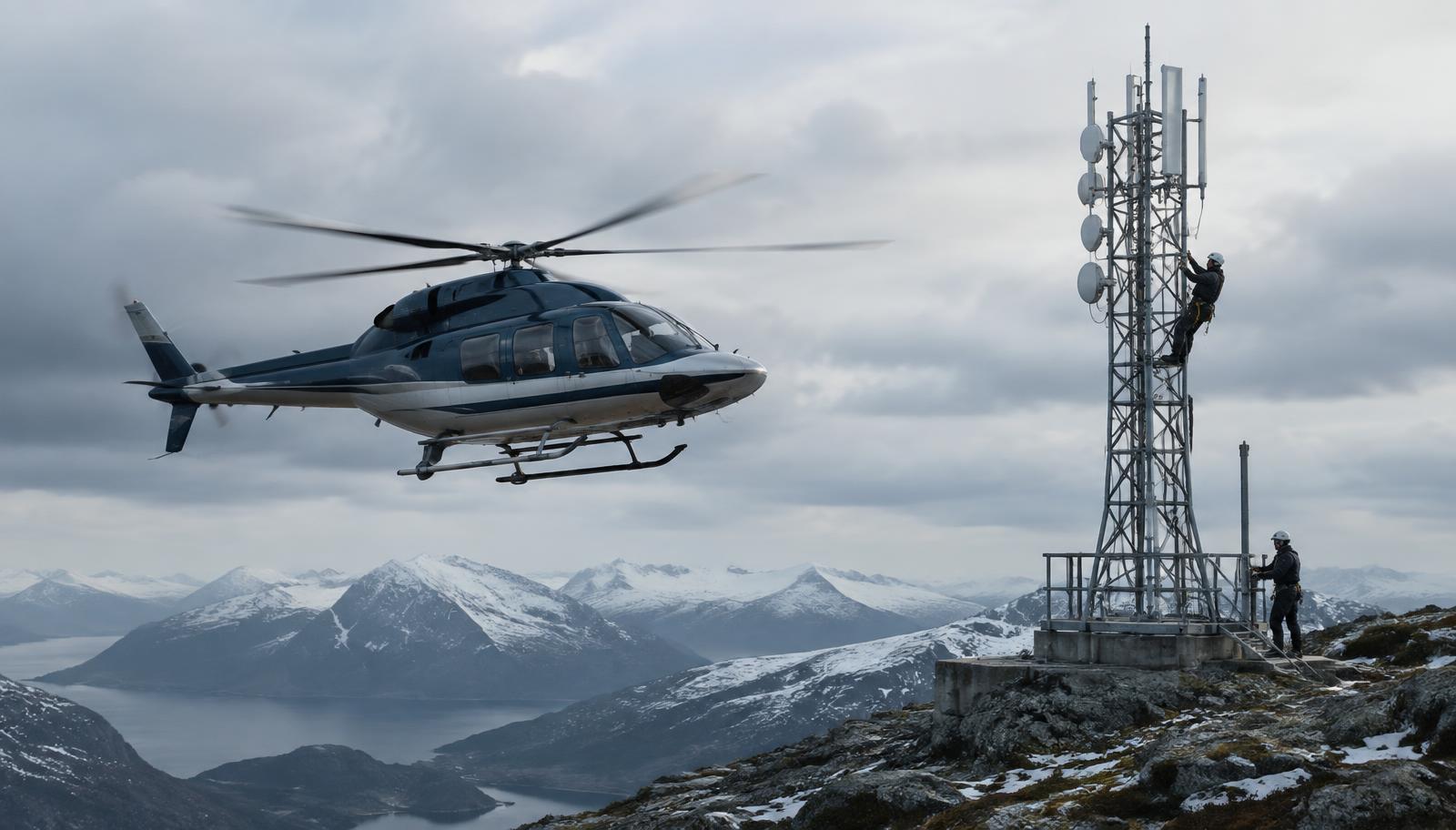
Helicopter support for telecom towers and remote infrastructure moves technicians, antennas, instruments and light equipment to sites that roads serve slowly or not at all. Feasibility is decided case by case by aircraft availability, landing-site suitability, payload, elevation, weather, local regulations, landing permissions, crew duty limits and operator review. SkyMatch is an independent broker and aviation concierge: it coordinates requests with licensed third-party operators and operates no aircraft.
Where helicopter support is used
Telecom and utility infrastructure is deliberately built where coverage and terrain demand, not where access is convenient. That produces a recurring operational problem: the asset is an hour away by air and most of a day away by road. Helicopter support is evaluated where the access cost, not the work itself, dominates the project.
- Tower inspection and maintenance — scheduled surveys, structural checks and planned climbs on ridge, island and desert sites.
- Emergency restoration — storm, fire or flood damage where the road route is cut and network downtime is the real cost.
- Antenna, equipment and technician deployment — 5G, fibre, microwave and broadcast programmes moving crews and light equipment between sites.
- Powerlines and utility infrastructure — line patrol, substation and pipeline corridors, and remote engineering projects.
- Road-limited terrain — mountain, desert, island, forest and seasonal-track access.
- Multi-day rotations — repeat sorties across a build or restoration campaign.
- Aerial survey and access feasibility — reconnaissance before committing ground resources.
Each of these is already documented in more depth on the remote telecommunications towers page, the emergency telecom restoration page and the remote infrastructure support hub.
When helicopter access is worth evaluating
The honest test is not speed for its own sake. Helicopter access is worth evaluating when at least two of the following are true: the road journey exceeds roughly three hours each way; the site is seasonally or currently unreachable; the technical team is scarce and its hours are the constraint; the task is time-critical because a network or asset is down; or several sites must be served in one working day. Where a single technician can drive to a roadside tower in ninety minutes, road access is usually the right answer and we will say so.
For a structured comparison of ground and air access on project work, see helicopter versus road transport for remote project teams and the industrial downtime overview.
What decides feasibility
Feasibility is a set of physical and regulatory constraints, assessed per mission. Nothing in the table below is a broker decision: the operator reviews and confirms each item, and weather can change the answer on the day.
| Mission factor | Why it matters | What to provide |
|---|---|---|
| Landing area | Surface, slope, obstacles, rotor clearance and downwash decide whether an approach is possible at all. | Coordinates, photographs, surface type, nearest clear area and who controls the land. |
| Payload | Crew, tools, antennas and instruments compete with fuel; payload sets the aircraft class. | Passenger count with realistic weights, equipment list and total kilograms per rotation. |
| Elevation and temperature | Performance falls with altitude and heat, which reduces what can be carried on the day. | Site elevation and expected conditions in the working window. |
| Permissions | Landing at a non-aerodrome site depends on local regulation and the landowner or site operator. | Site ownership, existing access agreements and any airspace restrictions you know of. |
| Weather window | Cloud base, visibility, wind and icing govern mountain, coastal and forest work. | Acceptable date range, earliest start and whether the task can slip a day. |
| Lead time | Suitable aircraft and crews are regional and finite; short notice narrows the field. | Target date, latest acceptable date and whether the work repeats. |
| Rotations | Multi-day or multi-lift work changes basing, fuel and crew planning entirely. | Number of days, sorties per day and whether the team stays on site. |
External load and heavy lift are assessed individually
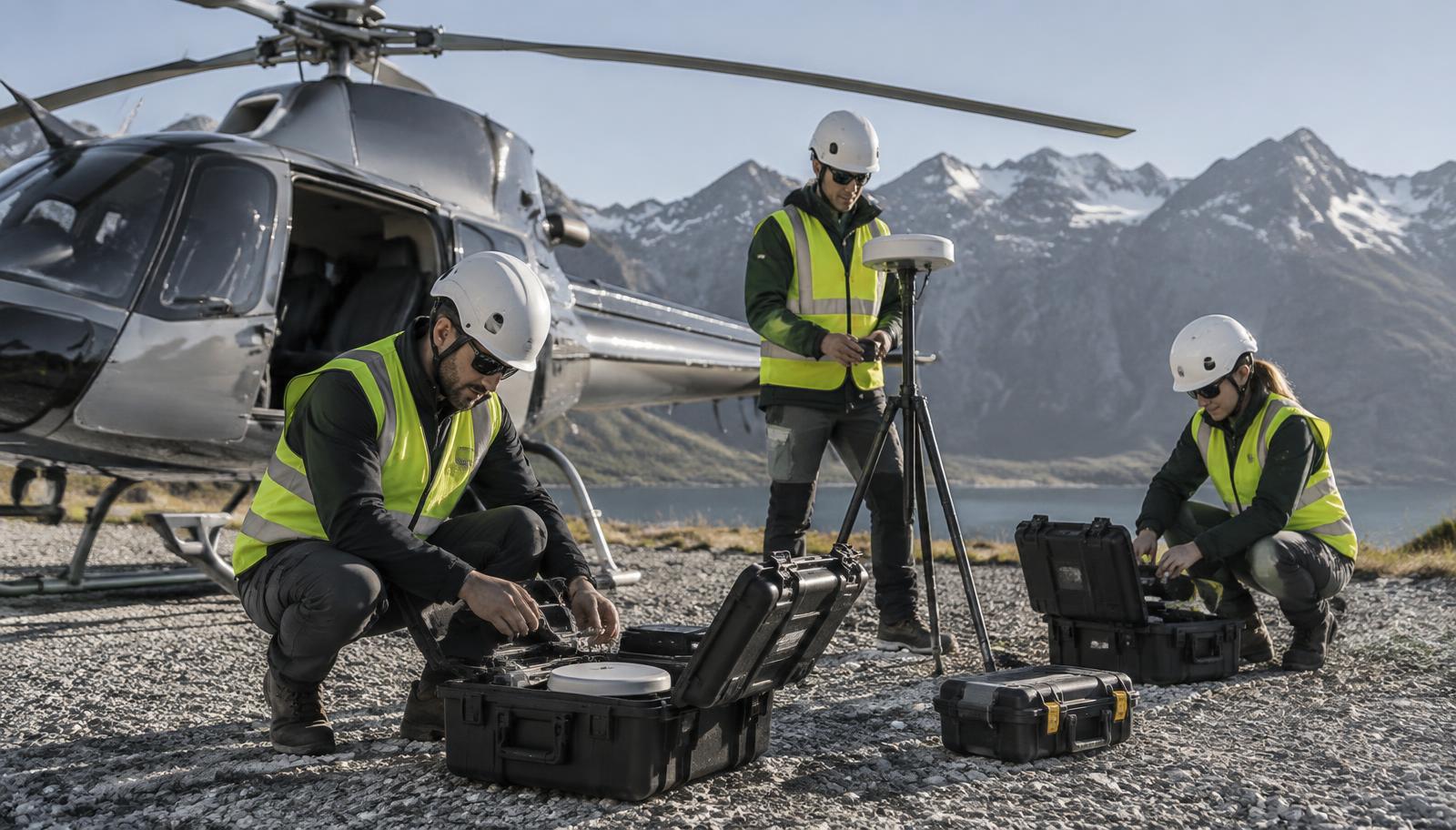
Lifting antenna sections, shelters, tooling or materials under the aircraft is a separate work class from carrying people. It requires operators holding those specific approvals, rigging and crew training, plus a suitable drop zone, ground crew and regulatory conditions. In many regions that capability simply is not based nearby. Such work is never presented as available until an operator has reviewed the load and the site. Background: external load missions and antenna installation.
Remote mission feasibility planner
Before sending a request, it helps to see which assumptions are weak. The existing SkyMatch planner takes the site type, payload, elevation, lift count, staging distance, road and crane access, and urgency, and returns a structured mission brief with the factors still to be reviewed and the information still missing. It produces planning guidance only — never a price, never an availability statement.
Remote tower helicopter mission feasibility planner
Site type, payload, elevation, rotations, staging distance, road and crane access, urgency and access constraints. Output: a structured mission brief, the feasibility factors to review, a landing and regulatory review reminder, and the detail still missing — then a pre-filled request for human mission review.
Planning estimate only — not a quotation. Aircraft availability, permissions, weather, landing access, payload and operator terms must be reviewed.
Planning checklist for project managers
- Site name, coordinates and elevation, plus the nearest town, airport or fuel point.
- Landing-site description and photographs, including the clear area around the tower or structure.
- Who owns or controls the site, and what access permissions already exist.
- Number of technicians per rotation, with realistic individual weights.
- Equipment list and total weight, flagging anything long, fragile or hazardous.
- Working window: earliest date, latest date, hours needed on site.
- Whether the task is a single visit, a rotation plan or an emergency restoration.
- Ground support available on site: vehicles, marshalling, fuel, communications.
- Any safety, security or induction requirements for visiting crews.
What information should I send in an RFQ?
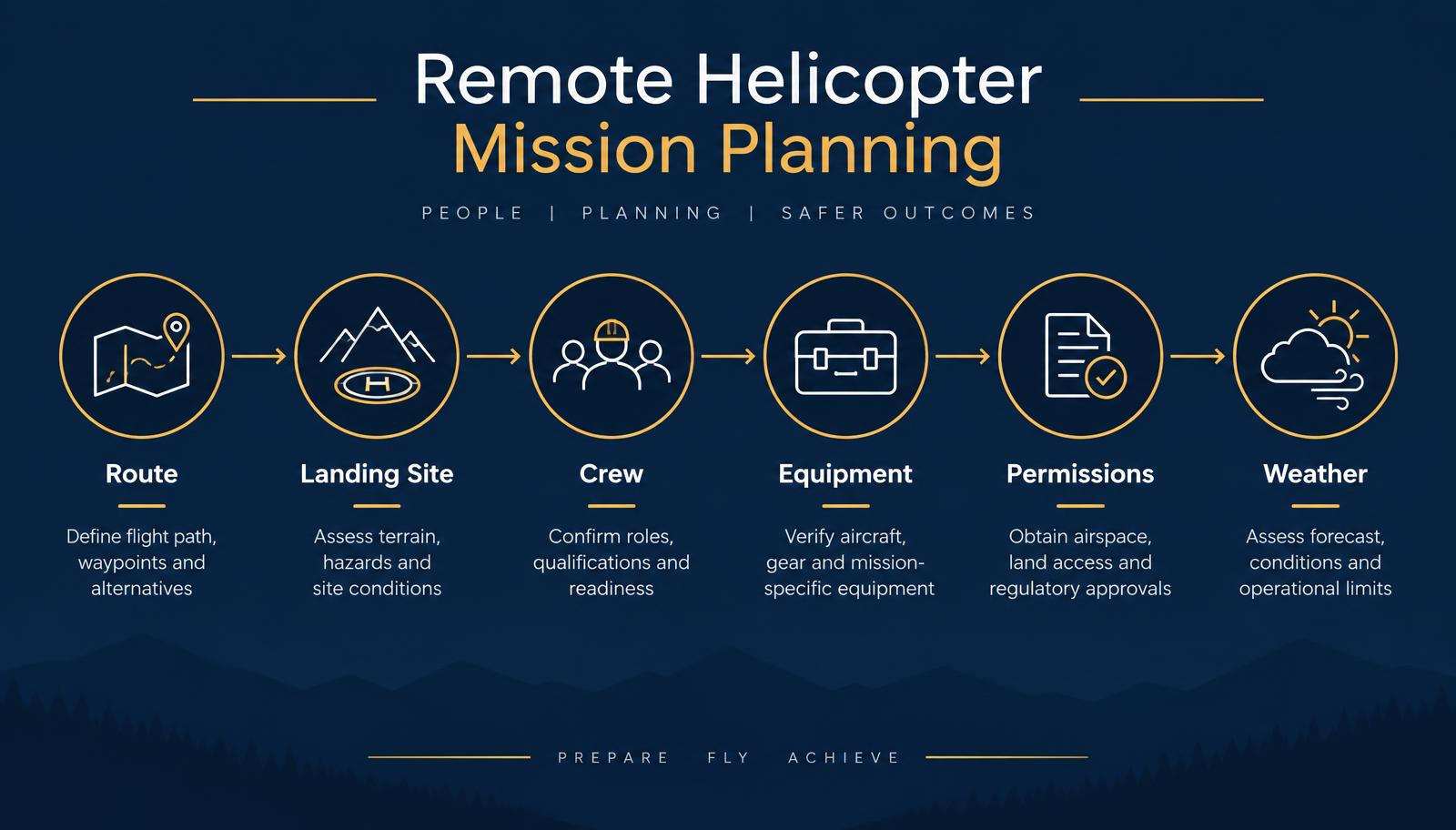
A reviewable request contains the departure point or nearest airport, the site coordinates and elevation, the date or date range, the number of people per rotation with weights, the equipment weight, the landing type (airport, helipad, private site, remote site or vessel where permitted), the number of days or rotations, the urgency, and any access or safety constraints. Anything you cannot answer yet should be marked unknown rather than guessed — an honest gap is faster to close than a wrong assumption.
Send it through the industrial mission request form, or the general request form. For cost structure rather than feasibility, see the helicopter charter cost guide.
How SkyMatch coordinates a helicopter mission
- Submit mission requirements — route, coordinates, dates, people, equipment and site constraints.
- Human review of the operational need, with missing detail identified and completed.
- Suitable licensed operator sourcing in the relevant region and work class.
- Feasibility, permissions and aircraft-fit review by the operator.
- Quote and coordination, subject to availability, weather and approvals.
SkyMatch is an independent global helicopter charter broker and aviation concierge for companies. It does not own or operate aircraft, is not an airline and is not an emergency responder. Aircraft, availability, landing permissions, permits, route feasibility and final pricing are confirmed by the licensed operator.
Frequently asked questions
Can a helicopter land next to a telecom tower?
Sometimes, and only where a suitable clear area exists and the site owner and local regulator permit the movement. Surface, slope, obstacles, guy wires and downwash all matter, and the operator makes the final judgement after reviewing coordinates and photographs. Where no landing is possible, work is planned from the nearest usable site with a short ground transfer.
How much equipment can be carried on a tower mission?
It depends on the aircraft available in that region, the number of technicians, site elevation and temperature on the day. Payload is a trade-off with fuel, so a precise equipment list in kilograms is the single most useful thing to send. The operator confirms what can be carried per rotation.
Is helicopter support realistic for emergency network restoration?
Requests can be submitted at short notice and reviewed immediately, but nothing is guaranteed. Availability of a suitable aircraft and crew, weather, landing permissions and regulatory approvals all govern whether a restoration flight can proceed. SkyMatch coordinates with licensed operators and never promises a response time or an outcome.
Can a helicopter lift antennas or sections onto a site?
External-load and heavy-lift work is a specialised class that only certain operators hold approvals and equipment for, and it is assessed individually. Load weight, rigging, drop-zone geometry, ground crew and regulatory conditions all apply. Such work is never assumed available in a region until an operator confirms it.
How far in advance should a remote infrastructure mission be requested?
Earlier is materially better: suitable aircraft, crews and approvals are regional and finite, and multi-day rotations need basing and fuel planning. Urgent requests are still reviewed, but the shorter the notice, the narrower the set of operators that can realistically support the task.
Does SkyMatch operate the helicopter?
No. SkyMatch is an independent global helicopter charter broker and aviation concierge for companies. Requests are reviewed by a human team and coordinated with licensed third-party operators, who confirm aircraft, feasibility, landing permissions and pricing. SkyMatch owns and operates no aircraft and is not an emergency service.
Related SkyMatch pages
Plan Your Helicopter Mission
Send us the route, date, people, equipment and mission requirements. Our team will review the request and coordinate suitable licensed operators.
Plan Your Helicopter Mission